
Watercolours Monday Afternoon: Summer Term
with Sophie Newnham
Watercolours are a pleasure to work with, whether adding a wash of colour to a drawing, layering to discover subtle shifts in tone, or combining with line to create delicate textures and form.
This medium has subtlety, translucency and an element of surprise. Over the course of the term, we’ll explore a range of approaches to watercolour, drawing inspiration from artists who combine observation, pattern and expressive composition. Students will work with pencil, ink, watercolour and coloured pencil, developing confidence across drawing, layering and detail.
Open to all levels
Summer Term Course Dates
4-6:30pm each Monday
20, 27 April
4, 11 18 May
(Half Term 25 May)
1, 8, 15, 22, 29 June
6, 13 July
Weeks 1 - 4 (20, 27 April; 4, 11 May)
Natural History- Under the Sea – Line, Wash & Observation
Inspired by Jean-Baptiste Vérany
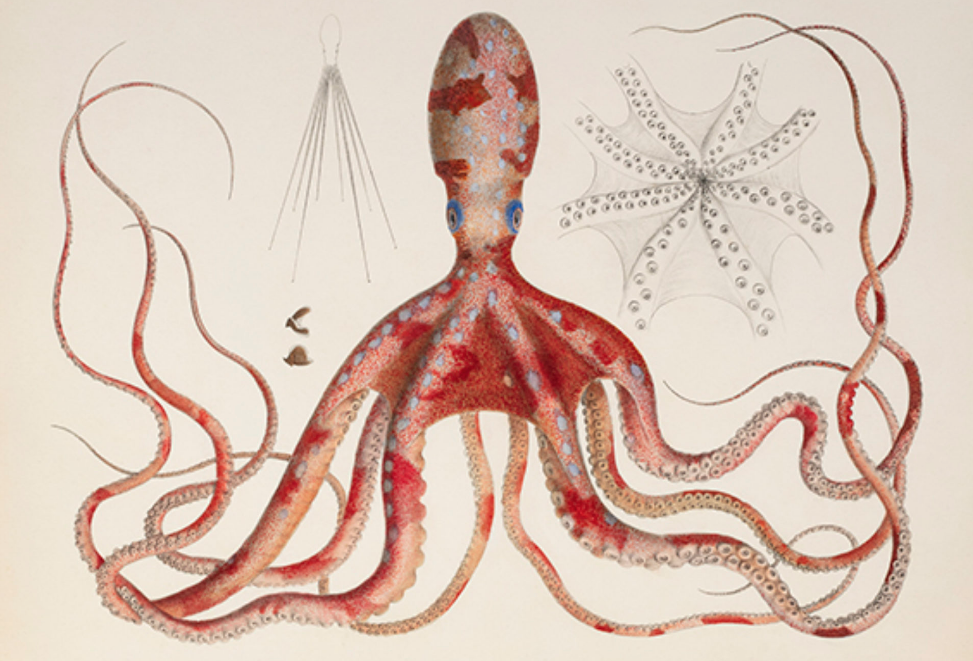
Jean-Baptiste Vérany
In this opening four-week module, we’ll take inspiration from the detailed marine illustrations of Jean-Baptiste Vérany, exploring how pencil, fineliner and watercolour can be combined to create lifelike studies of underwater forms.
Students will learn how to:
· Build accurate structure through careful pencil drawing
· Apply transparent watercolour washes
· Balance precision and fluidity when combining drawing and paint.
This module focuses on observation, proportion and layering, developing confidence in line and translucent layering.
Weeks 5 - 8 (18 May; 1 , 8, 15 June)
Pattern & the Natural World – Birds, Beasts and Botanical Motifs
Inspired by William Morris
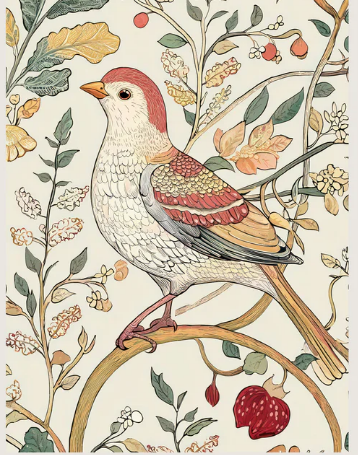
William Morris
In this module, we’ll explore the richly decorative world of William Morris, drawing inspiration from his designs rooted in the natural world. Focusing on birds, forest animals and intertwining foliage, students will develop their own decorative motifs and patterned compositions.
Using watercolour, ink pens and coloured pencils, students will learn how to:
· Simplify natural forms into stylised, harmonious motifs
· Create rhythm and balance through repeating shapes and patterns
· Build layered surfaces using watercolour washes as a base
· Add detail and definition through line and stronger pigments.
This module encourages a playful yet structured approach to composition, blending observation with imagination.
Weeks 9- 12 (22, 29 June; 6, 13 July)
Botanical Studies – Observation, Structure & Sensitivity
Inspired by Margaret Mee
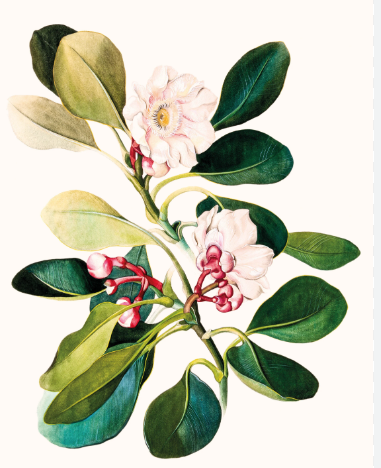
Margaret Mee
In the final four weeks, we’ll explore botanical painting through the work of Margaret Mee, focusing on botanical accuracy, delicate layering and sensitivity to form. Her work bridges beauty between observation and expressive composition, offering a thoughtful and meditative approach to watercolour.
Students will learn how to:
· Observe and record plant structures with clarity and precision
· Build form gradually through translucent layers of watercolour
· Develop subtle colour palettes and tonal shifts
· Create compositions that feel both precise and expressive
This final module encourages a slower, more considered approach to painting, bringing together drawing, layering and composition to conclude the term.
Skills covered: From drawing to watercolour painting. Painting with washes vs detailing; Fine-tuning our watercolours with pencils and fine-liner pens; Adding depth, seeing a range of tones; highlighting.
All necessary materials will be provided for your first session.
Materials provided throughout the course: Pencils- Hs to Bs; rubbers; basic paint, palettes and water holders.
Materials to bring with you: a range of watercolour brushes of various sizes; a block of watercolour paper; a simple set of watercolour paints; a set of fine-liner coloured inks; a bottle of masking fluid, and paper towels.